
Inside a Full Mouth Reconstruction: From Consultation to Final Results
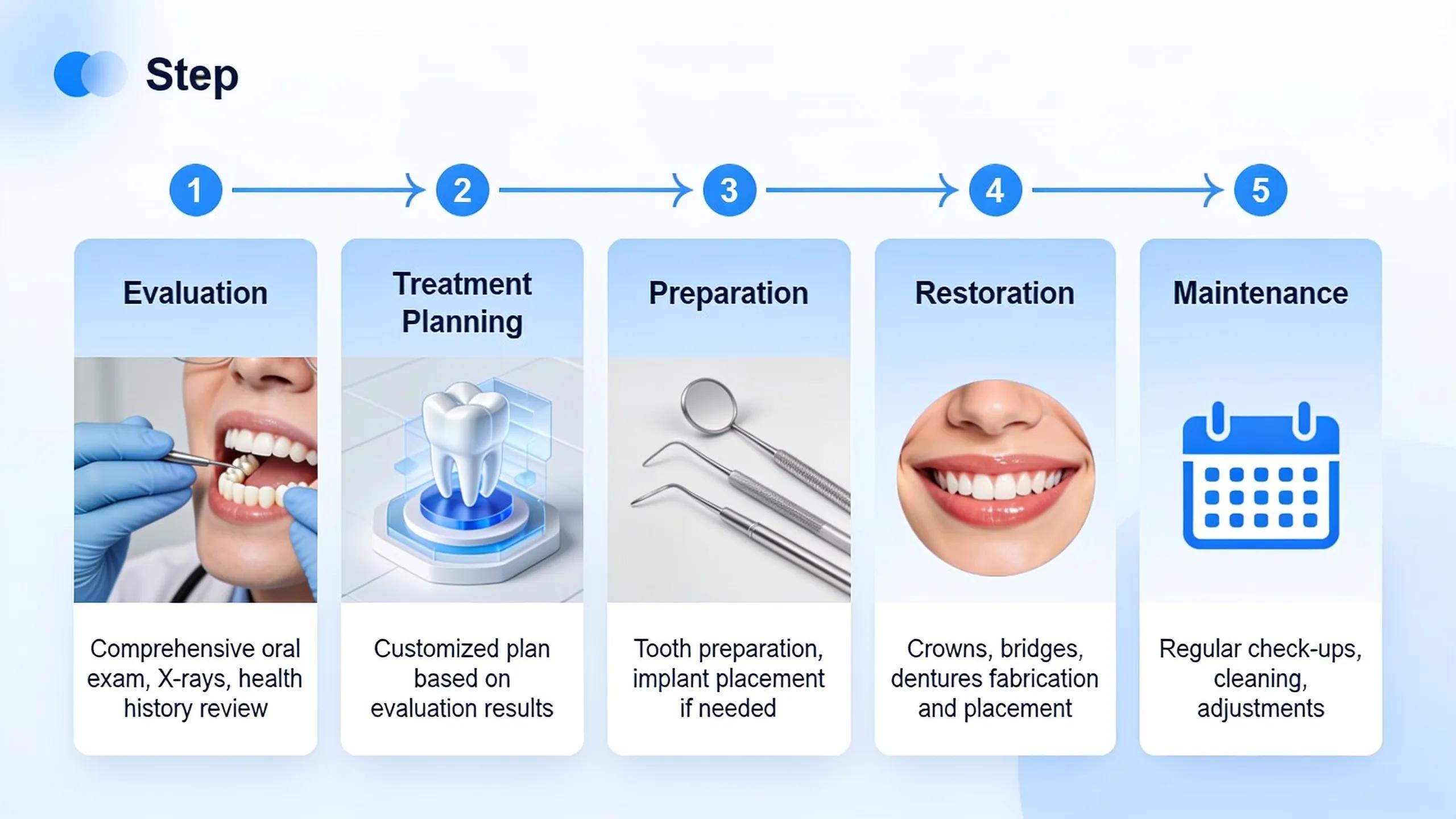
Full mouth reconstruction at Naia Dentistry and Implant Solutions progresses through five phases: evaluation, planning, stabilization, restoration, and maintenance. Total treatment spans 6 to 24 months, depending on complexity. Bone grafting and implant integration require 3 to 6 months of healing. Temporary restorations keep patients functional throughout, until Dr. Jerry Yu finalizes lasting results.
Why Does Full Mouth Reconstruction Take Time?
Comprehensive dental restoration requires multiple phases rather than a single office visit. Severe wear, missing teeth, and bite problems rarely stem from one issue. Each phase addresses a different layer of the underlying damage. Evaluation, planning, stabilization, restoration, and maintenance each build on the last, giving the mouth time to heal and adjust between stages.
Skipping steps or rushing healing periods risks compromising the final result, including implant stability and bite alignment. Patients who expect a quick fix often underestimate how much groundwork proper diagnosis and planning require. That groundwork protects long-term outcomes far more than speed ever could.
How Long Does the Process Typically Last?
Treatment timelines vary widely, ranging anywhere from 6 to 24 months depending on case complexity, healing requirements, and individual patient factors. A patient needing extensive bone healing or multiple implants will naturally require more time than one needing fewer restorative steps. NAIA Dentistry & Implant Solutions structures the full mouth reconstruction process around each patient's specific oral health needs rather than a fixed calendar.
What Happens During Each Phase?
Every phase serves a distinct clinical purpose:
Evaluation identifies the full scope of damage, decay, and bite misalignment
Planning maps out the sequence and combination of procedures needed
Stabilization addresses active issues like infection or bone loss before restoration begins
Restoration delivers permanent crowns, bridges, or implants
Maintenance protects results through ongoing follow-up care
NAIA offers a broad range of family and cosmetic dental services for patients throughout San Luis Obispo, CA, guiding each phase with an emphasis on comfort, simplicity, and gentleness at every appointment.
What Happens During Evaluation And Planning?
Diagnostic evaluation and detailed treatment planning open every reconstruction journey, taking place well before any procedure begins. This early phase sets the direction for the entire full mouth reconstruction process, giving both the dental team and the patient a shared roadmap. Skipping this step risks mismatched expectations and treatment delays later on.
Cone Beam CT imaging plays a central role during this stage. This advanced technology maps the jaw, teeth, and surrounding structures with a level of accuracy that traditional X-rays cannot match. The resulting images allow the dental team to identify bone density, nerve positioning, and hidden decay before committing to a restorative or cosmetic plan.
How is a treatment plan customized for each patient?
No two mouths present the same combination of wear, missing teeth, or bite issues, so no two plans look identical. Full mouth reconstruction in San Luis Obispo starts with a thorough review of the patient's goals, oral health history, and current condition. The scope of treatment — whether a full mouth restoration in San Luis Obispo requires replacing every tooth or addressing only a few problem areas — depends entirely on what the evaluation reveals.
What determines how long treatment planning takes?
Planning timelines vary based on case complexity. A patient pursuing full mouth rehabilitation in San Luis Obispowith extensive bone loss or multiple missing teeth typically requires a more detailed workup than someone with isolated wear patterns.
Key elements addressed during this stage of full mouth reconstruction in SLO include:
Comprehensive imaging and diagnostic review
Identification of decay, bone loss, or gum disease
Discussion of aesthetic and functional goals
Sequencing of procedures based on individual needs
This foundation ensures every later phase builds on accurate, personalized information.
How Does Stabilization And Preparation Work?
Stabilization addresses urgent problems first, then builds a foundation for lasting restorations. Oral infections, severe toothaches, and cracked or broken teeth get treated quickly, sometimes on the very same day. Pain relief comes before any long-term planning moves forward. This early phase clears the path for the rest of the full mouth reconstruction process to proceed without setbacks.
Once urgent concerns are resolved, attention turns to healing. Bone grafting and implant integration are common in complex cases. These steps require time built directly into the schedule rather than rushed through. Patients preparing for full mouth reconstruction in San Luis Obispo should expect this healing window. Grafted bone and implant sites both need a stable period before they can support permanent restorations.
How long does healing take before restorations are placed?
Bone grafting and implant integration typically require three to six months of healing. This range depends on the extent of grafting needed and how well the bone responds. Skipping or shortening this period risks implant failure down the road, so the timeline stays built into every treatment plan.
Is sedation available for patients anxious about multiple procedures?
Patients facing several restorative steps often feel understandable anxiety, and sedation options exist to ease that stress. Different sedation techniquescalm patients before and during in-office treatment, particularly for longer procedures common in full mouth restoration cases. This approach keeps comfort central throughout full mouth rehabilitation in San Luis Obispo. Multiple visits and extended chair time are often part of the process.
What Does Restoration And Implant Placement Involve?
Restoration and implant placement replaces damaged or missing teeth with permanent, functional structures while protecting comfort at every step. Temporary restorations remain in place throughout the full mouth reconstruction process. Patients never go without functioning teeth while healing occurs or lab work is completed. This continuity matters most for patients juggling work, meals, and social commitments during a multi-month treatment plan.
The final phase depends heavily on how many natural teeth remain and how the bite has changed over time. In some cases, the dentist recommends partial or full dentures to complete the smile rather than relying solely on fixed implant restorations. This decision is made individually, based on bone health, remaining tooth structure, and the patient's long-term goals.
Are Dentures Still Part of Modern Full Mouth Reconstruction?
Yes, dentures remain a common and effective component of comprehensive care. They give patients who have experienced tooth loss a natural-looking smile that lasts, restoring both appearance and chewing function. Many patients also report greater confidence in social situations once dentures replace gaps left by missing teeth.
How Is Progress Tracked During Restoration?
Progress checkpoints occur at each phase of treatment, not just at the final delivery appointment. Adjustments and refinements are expected as healing progresses and restorations are fitted, ensuring the bite, fit, and appearance meet the patient's needs before treatment concludes.
Patients considering full mouth restoration in San Luis Obispo benefit from this phased approach because it minimizes surprises. Each checkpoint allows the dental team to catch minor issues early, rather than after final restorations are permanently placed. The result is a smile built for durability, function, and everyday confidence.
What Happens After Treatment Is Complete?
Maintenance care and long-term monitoring define life after a full mouth reconstruction process wraps up. Restored teeth and gums require ongoing attention, much like any dental work, to preserve the results achieved during treatment. Skipping this stage risks losing ground on the very outcomes the reconstruction was designed to protect.
At NAIA Dentistry & Implant Solutions, a skilled team including Dr. Jerry Yu, Dr. Steve Huang, and Jessica Ortiz, RDAEF, provides attentive follow-up care once active treatment ends. This team monitors healing, checks the fit and function of new restorations, and addresses any adjustments needed as patients adapt to their rebuilt bite. Consistency matters here — small issues caught early prevent larger complications down the road.
How does follow-up care protect the investment made in treatment?
Replacing decayed or missing teeth does more than restore appearance; it protects the natural teeth that remain. Ongoing checkups help catch wear, decay, or gum changes before they compromise surrounding structures. This protective approach extends the life of both the reconstruction and the patient's overall oral health.
What should patients expect at follow-up visits?
Follow-up visits typically include an evaluation of restorations, gum tissue, and bite alignment. Patients pursuing full mouth reconstruction in San Luis Obispo can expect these checkpoints to continue well beyond the final procedure. Reviews from patients reflect confidence in this comprehensive approach, noting pain-free experiences that span everything from emergency visits to complex implant surgery.
For those exploring full mouth restoration in San Luis Obispo or considering full mouth rehabilitation in San Luis Obispo, new patients remain welcome to begin the process at any time. Anyone weighing full mouth reconstruction in SLO benefits from knowing that care continues, not ends, once new teeth are in place.
Conclusion
In closing, full mouth reconstruction represents a transformative journey that restores not only your dental function but also your confidence and quality of life. At NAIA Dentistry & Implant Solutions, our skilled team combines advanced technology with personalized care to guide you through each phase of this comprehensive process. From your initial consultation through your final results, we remain committed to ensuring your comfort and satisfaction, delivering a smile you can truly be proud of for years to come.