
Dental Crown vs. Filling: How Do You Know Which One You Need?
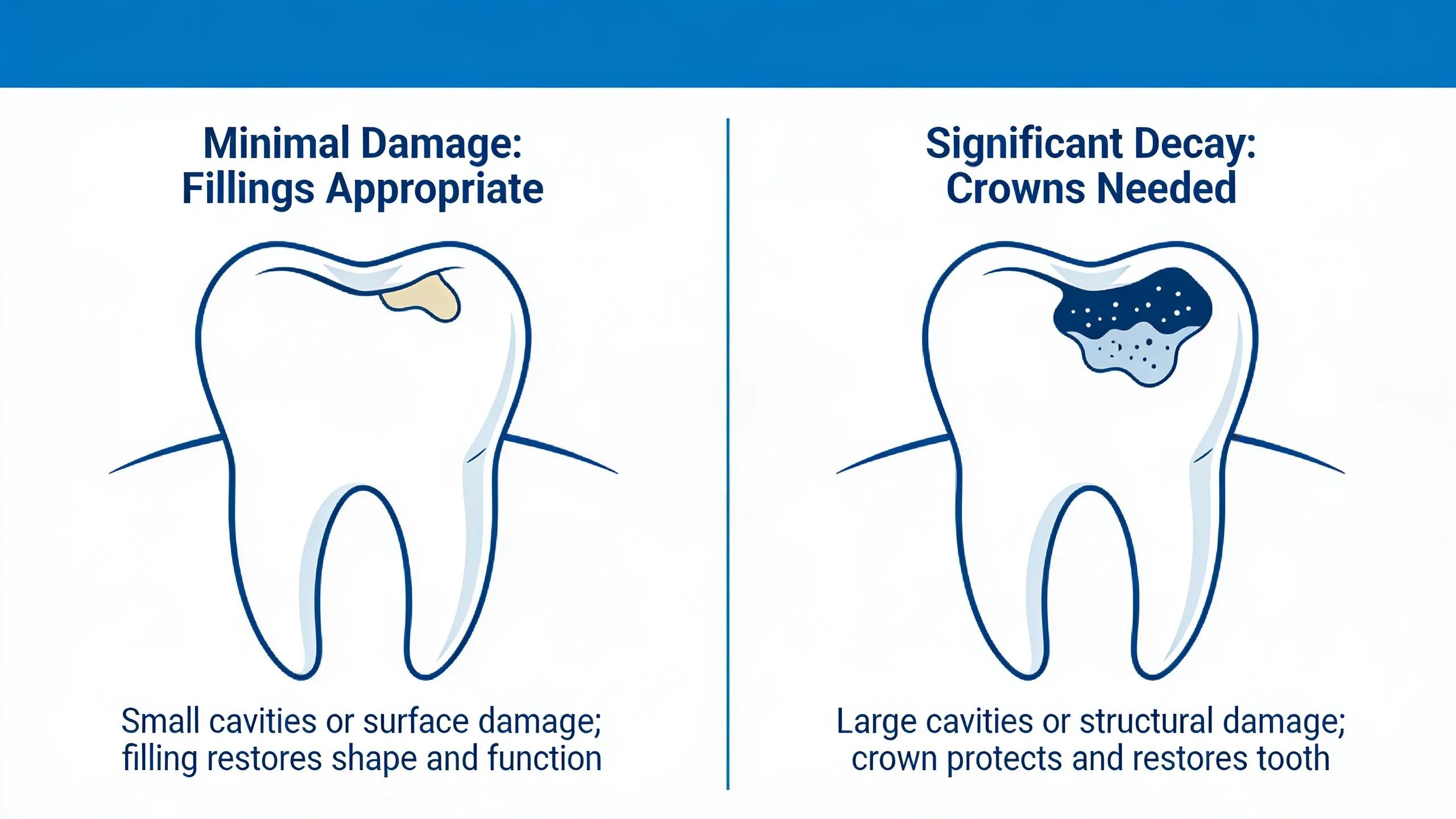
When it comes to crown vs filling, tooth damage severity determines the choice: fillings address minimal decay, restoring small areas of a tooth's structure. Crowns treat extensive damage, cracks, or large cavities by covering the entire tooth. Naia Dentistry and Implant Solutions evaluates each case individually, using diagnostic tools like Cone Beam CT imaging to recommend the appropriate restorative treatment for lasting oral health.
Why Did You Get a Crown Instead of a Filling?
A crown becomes necessary once tooth decay extends beyond what a simple filling can repair. Fillings suit teeth with minimal damage, while more extensive decay compromises too much of the tooth's structure for a filling alone to hold. The difference comes down to coverage: a crown vs filling decision hinges on how much healthy tooth remains. A filling sits inside the tooth, filling the cavity left after decay removal. A crown, by contrast, caps the entire visible portion of the tooth, protecting what's left from cracking or breaking further.
Patients frequently question this recommendation, especially after hearing a friend or family member received only a filling for what seemed like a similar problem. That reaction is understandable. Two teeth can look comparable on the surface yet have very different amounts of remaining healthy structure underneath.
Why did the dentist say a filling wouldn't work?
A filling depends on enough surrounding tooth structure to hold it securely in place. When decay or a fracture removes too much of that structure, a filling risks failure under normal chewing pressure. A crown solves this by encasing the tooth, distributing bite force evenly across a durable outer shell.
Does needing a crown mean the tooth is in worse condition?
Generally, yes. Crowns typically indicate greater structural loss than fillings address. That doesn't mean the tooth is beyond saving. It means the remaining structure needs full coverage rather than a partial repair.
NAIA Dentistry & Implant Solutions provides a range of dental services for clients in San Luis Obispo, CA, along with dental fillings in San Luis Obispo, both fall under the restorative and cosmetic services NAIA Dentistry & Implant Solutions provides throughout the region. Anyone weighing crowns in SLO against a filling deserves a clear explanation of the tooth's actual condition before treatment begins. Patients exploring dental fillings in SLO should expect the same transparency.
What Does a Dental Filling Actually Repair?
A dental filling restores a tooth after decay has created a small hole. Cavity, without threatening the tooth's overall structure. Left untreated, that small area of decay spreads deeper into the tooth, eventually reaching the nerve and turning a simple repair into a much larger procedure. Fillings address minimal damage, sealing the affected area and preventing bacteria from progressing further into the tooth. Crowns, by contrast, come into play once decay or damage becomes more extensive. Both restorations share the same underlying goal of stopping decay in its tracks, just at different stages of severity.
The team at NAIA is composed of skilled and friendly professionals, including Dr. Jerry Yu, Dr. Steve Huang, and Jessica Ortiz, RDAEF, who ensure that every patient receives attentive care and quality dental work. Patients considering dental fillings in SLO benefit from a provider whose daily focus includes this exact procedure, paired with a broader practice offering that spans preventive checkups through cosmetic and restorative treatment.
How Does NAIA Make Filling Appointments More Comfortable?
Comfort remains central to how the practice approaches even routine restorative work. NAIA applies technology such as Cone Beam CT imaging. Laser dentistry across its service range, supporting more precise diagnosis and gentler treatment. Every procedure, including a standard filling, follows the same commitment to simplicity and gentleness that defines the practice's broader philosophy.
Is a Filling Always Enough to Stop Decay?
Not always. A filling only works when a cavity remains small enough that the tooth's core structure stays intact. Once decay advances beyond that point, a filling can no longer provide adequate support, and a crown becomes the more appropriate restorative option.
When Does a Tooth Need a Crown Instead?
A tooth needs a crown when decay or structural damage extends beyond what a filling can support. Dental crowns and fillings both play vital roles in restorative dentistry, but each addresses a different level of damage. A crown vs filling decision generally comes down to how much healthy tooth structure remains after decay is removed.
Fillings work well for small to moderate cavities where enough natural tooth remains to hold the material securely. Once decay spreads deeper into the tooth. A fracture compromises the tooth's strength, a crown becomes the more reliable option. Crowns encase the entire visible portion of the tooth, offering protection that a filling cannot provide once damage becomes extensive.
Can a missing tooth need a crown too?
Yes — when a tooth is missing entirely, restoration takes a different path. An implant post is placed into the jaw, then capped with a crown to recreate a tooth that looks and feels natural. This approach differs from filling or crowning an existing tooth, since no natural structure remains to repair.
How is the right treatment determined?
Accurate diagnosis starts with clear imaging. NAIA Dentistry & Implant Solutions applies Cone Beam CT imaging. Laser dentistry to assess decay depth before recommending a filling or a crown, ensuring the decision reflects the tooth's actual condition rather than guesswork.
Patients considering crowns in San Luis Obispo or dental fillings in San Luis Obispo benefit from this evaluation-first approach. Common signals that a crown may be needed include:
Cracks or fractures extending below the gumline
Decay covering more than half the tooth's surface
A previous filling that has failed or weakened the tooth
New patients weighing either crowns in SLO or dental fillings in SLO are always welcome to join the practice for a full evaluation.
Will Getting a Crown or Filling Hurt?
Modern numbing techniques and gentle instrumentation keep both procedures comfortable for the vast majority of patients. Local anesthetic blocks sensation in the treatment area before any drilling or shaping begins. Pain during the appointment stays minimal. Mild soreness or sensitivity afterward is common and typically fades within a few days.
Anxiety, not pain, tends to be the bigger obstacle for many patients considering crowns in San Luis Obispo or a routine filling. Dr. Jerry Yu addresses this directly: for patients who feel fearful or tense about dental visits, he may recommend a sedation optionto help them relax enough to receive treatment calmly. This approach turns a dreaded appointment into a manageable one.
Precision also plays a role in reducing discomfort. NAIA's use of laser dentistry and Cone Beam CT imaging allows for accurate, minimally invasive preparation on both simple fillings and more involved crown work. Less guesswork during preparation means less unnecessary tissue disruption, which translates to a gentler experience overall.
Who performs these restorations at NAIA?
Jessica Ortiz, RDAEF, handles the majority of the practice's filling and crown restorations. She brings 13 years of dental field experience to every appointment, giving patients a familiar, steady hand throughout treatment.
Does a crown hurt more than a filling?
Crown placement usually requires more tooth reshaping than a filling, but anesthetic keeps the procedure itself pain-free. Recovery sensitivity may last slightly longer with a crown simply because more of the tooth structure is involved.
Ultimately, comfort remains a practice-wide priority rather than an afterthought. That commitment to gentleness and simplicity extends across every restorative service, from a small filling to full dental fillings in SLO and complete crown placements. Patients facing either procedure can expect the same calm, careful standard of care.
How Do You Choose Crowns or Fillings in SLO?
Extent of tooth damage determines the answer, not personal preference. A structural difference separates the two treatments: a dental filling sits inside the tooth to repair a contained area of decay. A crown covers the entire visible portion of a damaged tooth like a cap. That distinction guides nearly every treatment decision a dentist makes when facing decay, a cracked cusp, or a failing old restoration.
NAIA Dentistry & Implant Solutions provides a full range of dental services, including both fillings and crowns, for patients throughout San Luis Obispo, CA. Family and cosmetic dentistry needs are addressed under one roof, with treatment plans built around the specific condition of each tooth rather than a one-size-fits-all approach.
Is a Crown or Filling Better for a Cracked Tooth?
The answer depends on how much of the tooth structure remains intact. A tooth with a small crack or minor decay typically responds well to a filling. The surrounding structure stays strong enough to support the repair. A tooth with extensive fracturing or deep decay generally needs a crown. The remaining walls are too weak to hold a filling securely.
Patients weighing crowns in San Luis Obispo against dental fillings in San Luis Obispo benefit from an in-person evaluation. X-rays and a visual exam reveal details a self-diagnosis cannot. Consider the following factors during that evaluation:
Size and depth of the decayed or damaged area
Amount of healthy tooth structure remaining
Whether the tooth has cracked, chipped, or fractured
Condition of any prior filling or restoration
New patients uncertain about crowns in SLO versus dental fillings in SLO remain welcome to schedule a consultation. An experienced provider examines the tooth and recommends the most conservative effective treatment.
Conclusion
In closing, determining whether you need a filling or a crown depends on the extent of tooth damage and your dentist's professional assessment. At NAIA Dentistry & Implant Solutions, our skilled team evaluates each situation carefully, using advanced diagnostic technology to recommend the most appropriate treatment for your specific needs. Whether a conservative filling restores your tooth or a crown provides comprehensive protection, we remain committed to delivering gentle, comfortable care that preserves your natural smile and supports your long-term oral health.